Adding a deck, room addition, or accessory structure? We pour permitted, rebar-reinforced concrete footings in Pittsburg sized for local clay soil and California seismic standards - so your structure stays level and stable for the long term.
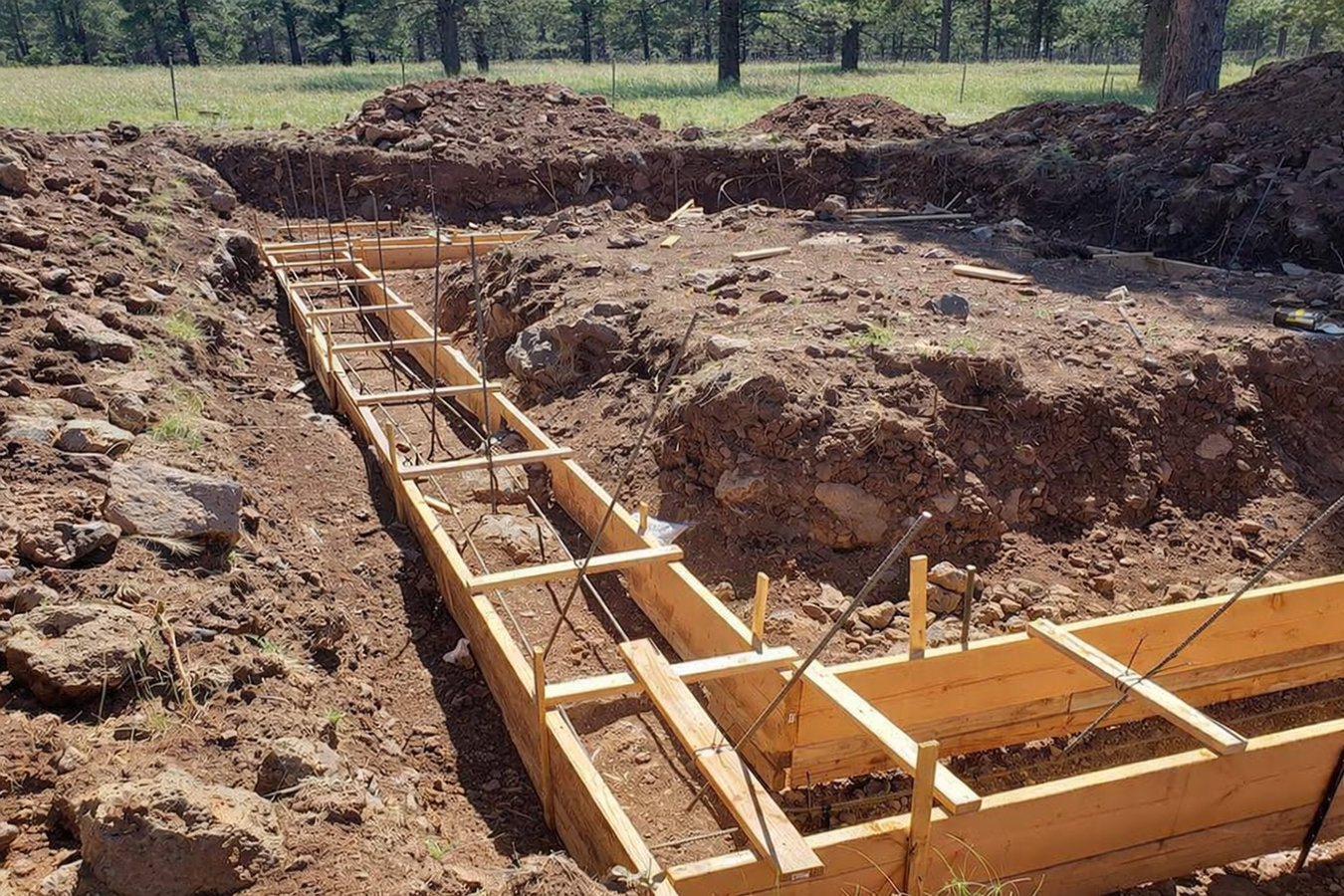
Concrete footings in Pittsburg, CA are the underground concrete base that holds up a structure - a deck, room addition, fence, retaining wall, or accessory dwelling unit. The crew digs to the required depth, sets forms and rebar inside, then pours the concrete after a city inspector confirms the excavation meets code. Most residential footing projects take one to three days of active work, plus a curing period of at least a week before building on top. From first contact to a pour-ready footing, the full timeline including permits is typically two to four weeks.
Pittsburg and the surrounding East Contra Costa area sit on expansive clay soil that moves with the seasons - swelling when wet and shrinking when dry. That repeated movement is hard on footings that were not designed for it. Combined with the area's seismic exposure near active fault systems, it means footings here need to be sized and reinforced beyond what a basic national standard would require.
Footing work often comes up as the first phase of a larger structural project. Homeowners adding a new structure frequently coordinate their footings alongside foundation installation or foundation raising when their existing foundation also needs attention.
If a deck post has started to tilt, or you can see a gap forming between the post base and the concrete below, the footing underneath may have shifted or deteriorated. In Pittsburg's clay soil, this kind of movement is more common than homeowners expect - the soil swells and contracts with the seasons and can work a footing loose over time. A leaning post is a safety issue, not just a cosmetic one.
Horizontal or stair-step cracks near the base of a wall, or cracks in a concrete slab that are widening over time, can signal that the footing below is moving or settling unevenly. Pittsburg's expansive clay soil is a known contributor to this kind of cracking, especially after a wet winter followed by a dry summer. A crack that was hairline last year and is now a quarter-inch wide is worth getting evaluated.
Any new structure attached to your home or built in your yard needs footings before framing goes up. This is not optional - the City of Pittsburg requires it as part of the permit process, and skipping it can create serious problems when you sell the home. If you are in the planning stage, now is the right time to talk to a concrete contractor about footing requirements.
When a foundation shifts, the frame of the house shifts with it - and the first place you usually notice it is doors and windows that no longer work the way they used to. This symptom does not always mean a footing problem, but combined with cracks in drywall near the corners of windows or doors, that combination is worth a professional look.
We handle concrete footings for a wide range of residential and small commercial projects - deck footings, continuous perimeter footings for additions, pier footings for post-and-beam structures, and footings for accessory dwelling units and detached garages. Every job includes calling 811 for utility marking before digging, permit application and inspection coordination with the City of Pittsburg, properly sized excavation, rebar placement to California seismic standards, and the concrete pour itself. This is the same foundation-level work that connects to our foundation raising projects for homeowners addressing existing structural issues at the same time.
The American Concrete Institute publishes the national standards used to specify how footings are mixed, placed, and cured - you can explore those resources at concrete.org. Locally, Contra Costa County seismic hazard mapping also shapes how structural footings are designed in this area - details available through the Contra Costa County website.
Best for homeowners adding a new deck, pergola, or patio cover that requires a permitted structural base before framing can begin.
Suits homeowners planning a permitted room addition, garage conversion, or accessory dwelling unit where the new load needs proper concrete support.
Ideal for property owners installing a new fence, gate, or retaining wall that needs concrete footings to stay plumb and stable in Pittsburg's clay soil.
A significant portion of Pittsburg's residential neighborhoods were built between the 1940s and 1980s - homes now 50 or more years old with original foundations built to older standards. When owners of these homes add a deck, garage, or ADU, the new structure needs footings designed for today's California seismic requirements, not the older code the home was originally built to. In some cases, a soils evaluation is required before the permit is issued because the clay soil variability in older Pittsburg neighborhoods can affect how the footing is sized. Homeowners near the waterfront and lower-lying areas close to the Delta face the most active soil conditions.
Pittsburg summers push into the 90s and above, which requires extra attention during the curing period right after a pour. If concrete dries out too quickly in hot, dry conditions, it can crack before it reaches full strength - weakening the entire footing. We schedule pours for early morning and protect the surface during curing to avoid this. We do this same work in Concord and Walnut Creek where the climate and soil conditions are similar, and we apply the same local-specific approach to every project.
We ask a few basic questions about what you are building and where, then schedule a free site visit to look at the area, take measurements, and give you a written estimate. You will hear back within one business day. Do not be surprised if we ask about the permit - that is a sign we are doing things the right way.
For most structural projects in Pittsburg, we apply for a building permit through the City Community Development Department before any digging starts. This step typically takes a few days to a couple of weeks depending on the project. You do not need to navigate this yourself - we handle the application and keep you updated on timing.
Before digging, California law requires underground utilities to be marked - we call 811 to have gas, water, and electrical lines flagged in your yard. The crew then digs to the required depth and sets up the forms and rebar. Before any concrete is poured, the city inspector comes out to check the excavation depth, size, and steel placement.
Once the inspection is passed, we pour the concrete - typically delivered by a ready-mix truck. In Pittsburg's summer heat, we schedule pours for early morning and protect the fresh surface during curing. After at least a week of curing, your footing is ready for whatever is being built on top, and the city may do a final inspection at the end of the overall project.
We respond within one business day. No pressure, no obligation - just a clear answer on what your project requires and what it will cost.
(925) 431-7175We apply for the permit, schedule the inspection, and are on-site when the city inspector arrives. Your footing work is on record as reviewed and code-compliant - which protects your home's value and keeps things clean for any future sale. Unpermitted structural work is one of the most common problems that surfaces during California home transactions.
We account for Pittsburg's expansive clay soil in every footing we dig - deeper excavation, correct footing size for the load, and rebar placement that handles the seasonal ground movement this area sees. A footing that was not sized for local conditions will shift or crack within a few years.
Pittsburg sits near multiple active fault systems, and California building standards reflect that. Every footing we install is built to handle lateral earthquake forces - not just the downward weight above it. The permit and inspection process confirms this independently, so you are not just taking our word for it.
We have poured footings for decks, ADUs, and room additions across Pittsburg's older flatland homes and newer hillside subdivisions. Homes built in the 1950s through 1970s often need new footings when a structure is added - we know how older foundations in this city are built and what needs to happen to tie new work into them correctly.
You can verify our California contractor license on the Contractors State License Board website before signing anything - we encourage every homeowner to do that check. A licensed, insured crew working under a pulled permit is the only version of structural footing work that genuinely protects your investment.
When your existing foundation has settled or shifted, foundation raising addresses the underlying structural issue - often coordinated alongside new footing work.
Learn moreFull foundation installation for new structures or major additions - the broader scope that new concrete footings anchor into.
Learn morePermit backlogs grow as the spring building season approaches - reach out now to get on our schedule and receive a written estimate before project timelines start stretching.